
Rooms we made safe
By Laila Abdelle

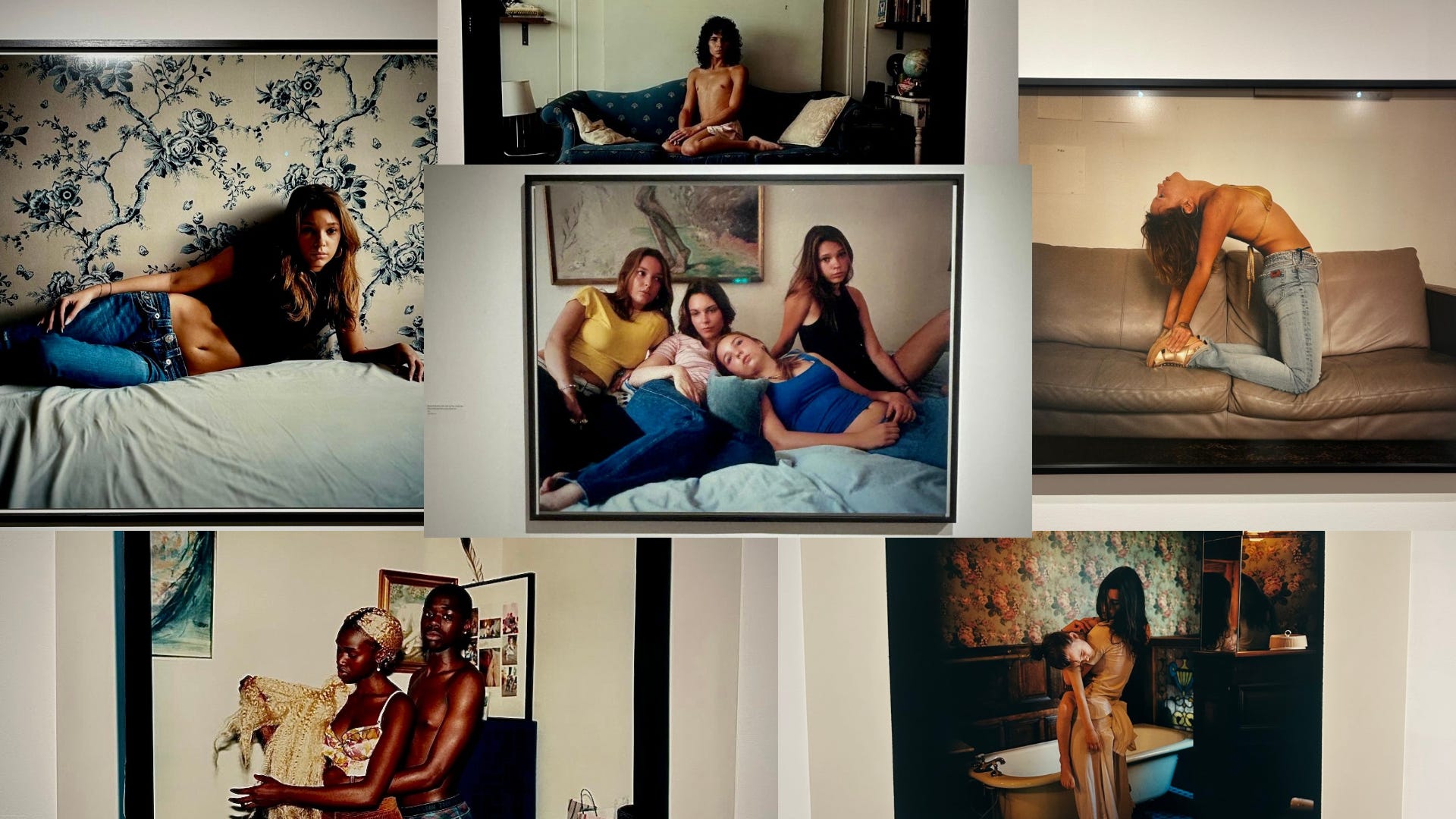
I was doomscrolling on Instagram when I came across a post from Brandts Kunstmuseum announcing a new exhibition by the Danish photographer Michella Bredahl.
I was immediately struck by the intimacy of her photographs. Looking through the museum’s post, I felt an unexpected rush of nostalgia. Curious, I clicked her profile.
Her Instagram feed felt both chaotic and intentional. The more I scrolled, the more fascinated I became. Her photographs seemed to capture something beyond appearance. The people in them felt seen. Not observed, but understood. Through her lens, strangers became familiar.
By the time I closed Instagram, I knew I wanted to experience the work in person.
I remember feeling strangely nervous about going to the museum alone. As if someone would discover I knew very little about the art world and immediately escort me out of the building. Looking back, the fear feels ridiculous. I half expected the receptionist to point at me and yell, “FRAUD!”
Thankfully, she did not.
After safely storing my coat and bag in a locker, I made my way to the exhibition.
The first photograph I remember seeing was of four young girls.
I remember the tag saying they were sisters. Something I noticed throughout Michella’s curation was that many of the subjects were related to one another, longtime friends, or people she knew personally. Suddenly, the exhibition title made sense: Rooms We Made Safe.
What does it mean to make a room feel safe? How do we know when we are safe enough to be fully seen?
Researcher and author Brené Brown argues that vulnerability is often misunderstood. We associate it with fear, shame, grief, and disappointment, when in reality it is the birthplace of love, belonging, joy, courage, and creativity. If vulnerability is the willingness to be seen, then perhaps safety is what makes that willingness possible.
The theme of the exhibition aligned perfectly with the photographs. The subjects appeared exposed yet protected. Intimate yet unguarded. Looking at the images felt like walking through a neighbourhood at dusk and catching glimpses through strangers’ windows. Their lives did not belong to me, yet they felt strangely familiar.
Perhaps that familiarity came from my own understanding of closeness.
Growing up in a family of eight siblings, relationships were often shaped by age. My siblings naturally fell into two groups: the older ones and the younger ones. Being part of the younger group meant that my understanding of family was built alongside those who were moving through life at the same pace as me. We attended the same schools, knew the same teachers, and spent afternoons in the same sports clubs and after-school activities. One by one, we followed each other through childhood milestones.
In many Somali households, older siblings are often afforded a level of respect that can resemble that of a parent. While that created admiration, it also created distance. Vulnerability came more easily with the siblings closest to my age because our experiences mirrored one another. There was comfort in knowing they understood without needing an explanation.
Looking at Michella’s photographs of sisters and close friends, I found myself thinking about that kind of familiarity. The kind that is built through shared bedrooms, routines, secrets, and ordinary days. The kind that emerges when people witness each other’s lives unfold in parallel. Her photographs reminded me that intimacy is rarely created through grand gestures. More often, it is created through repetition. Through being known. Through the quiet accumulation of trust.
Perhaps that is what Rooms We Made Safe is really about. Not the physical rooms themselves, but the relationships that transformed them into places where vulnerability could exist.
Each photograph told a story—not only of the people being photographed, but of Michella’s relationship to them and the circumstances that brought them together.
As someone who is deeply moved by storytelling, this was the first time photography had affected me in the same way as a novel, film, or essay. Until then, I had thought of storytelling primarily through words. Michella’s work challenged that assumption. Her photographs revealed that stories could be told through a glance, a gesture, a shared room, or the distance between two people sitting beside one another.
Standing in the gallery, I began to understand photography differently. It was not simply about documenting a moment, but about preserving a feeling. A relationship. A version of someone’s identity that might otherwise go unnoticed.
Looking back, my visit to Rooms We Made Safe feels significant because it expanded my understanding of what storytelling can be. Michella Bredahl showed me that a camera can do more than capture an image—it can bear witness.
What I adore about Michella’s photographs is their undeniable sensuality—not in a sexual sense, but in the way they invite you to linger. There is a tenderness to her gaze, a fascination with the textures of human experience. The photographs feel less concerned with documenting reality and more interested in preserving feeling. They draw you in slowly, encouraging you to look closer.
Michella’s work does not shy away from nudity, intimacy, or sex work. Yet these subjects never felt sensationalized. Instead, they felt human. Her photographs seemed to approach femininity with curiosity and admiration, allowing her subjects to exist as complex individuals rather than symbols or stereotypes. The result was a body of work that expanded my understanding of self-expression and whose stories are worthy of being seen.
The exhibition was rich with themes of memory, identity, and belonging, but one of the moments that stayed with me most was learning about Michella’s mother.
As I moved through the exhibition, I discovered that Michella credits her mother as one of the earliest inspirations behind her love of photography. What struck me was that her mother had also been a photographer, yet had never publicly exhibited her work. This exhibition marked the first time her photographs had been shown.
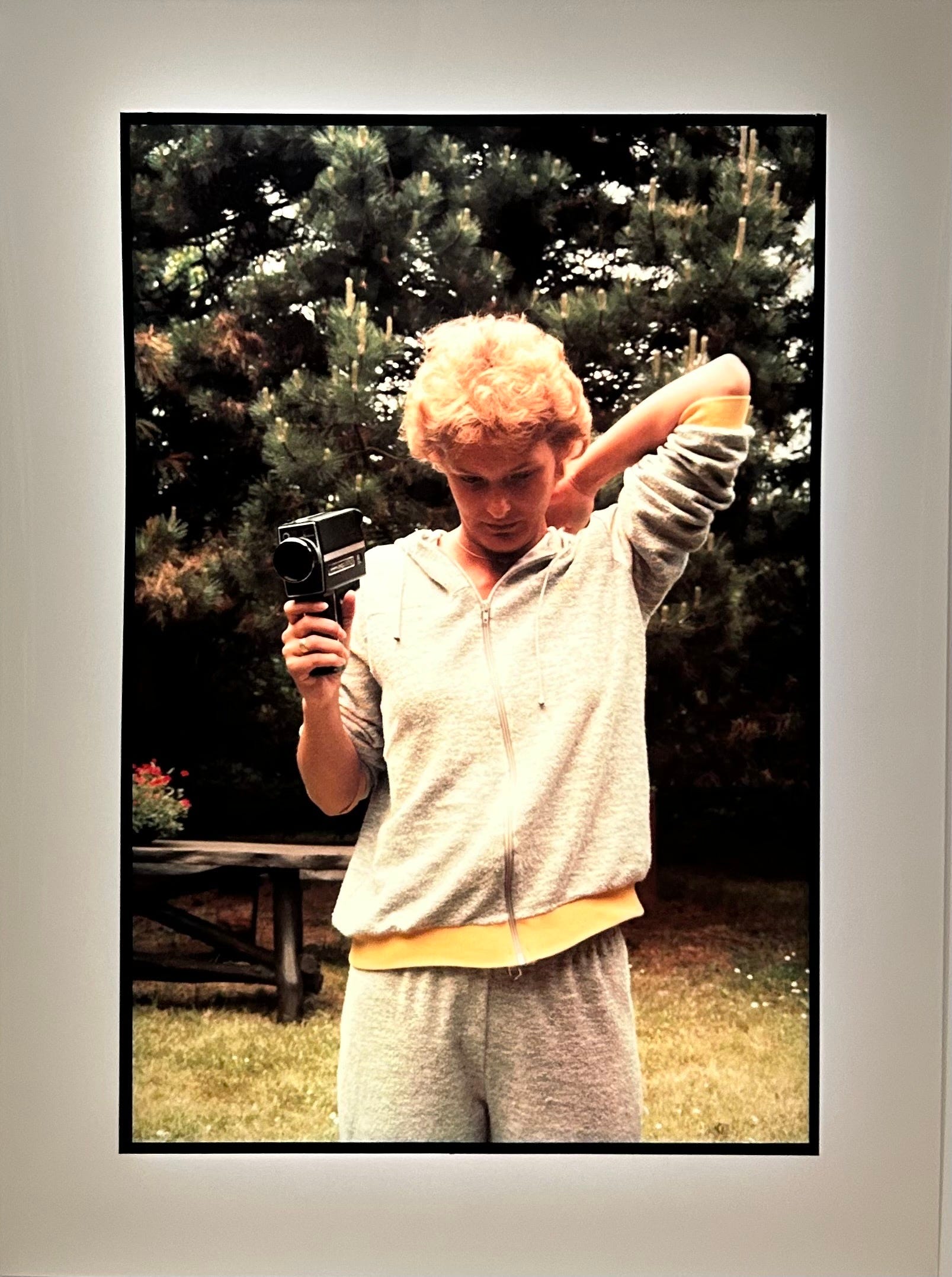
There was something deeply beautiful about that revelation. An exhibition centred on intimacy and human connection suddenly became a story about inheritance. About a daughter carrying forward a creative lineage while simultaneously creating space for her mother’s work to be seen.
The photograph of her mother holding a camera felt symbolic. Not simply because she was a photographer herself, but because it revealed how creativity often moves quietly between generations. Through observation. Through encouragement. Through the simple act of showing someone how to look at the world.
In many ways, that inclusion felt like the heart of Rooms We Made Safe. The exhibition was not only documenting relationships; it was built from them. Every photograph became evidence of the people who shape us, inspire us, and make us who we are.
Unlike Michella’s photographs, which often centred on the lives of others, Maria Bredahl’s work was largely composed of self-portraits. While glimpses of other people appeared throughout her photographs, they remained on the periphery. Maria was both the photographer and the subject, documenting her own lived experience and placing herself at the centre of the narrative.
The accompanying texts revealed that Michella grew up in a working-class neighbourhood with a single mother who took on various jobs to support her family, including sex work. Elements of sexuality and self-expression were present throughout Maria’s self-portraits, not as something hidden, but as something owned.
Seeing her mother’s work alongside Michella’s created an interesting dialogue between the two artists. While their approaches differed, both seemed drawn to questions of identity, femininity, and visibility. Looking at the photographs side by side, I found myself wondering how much of Michella’s fascination with intimacy and sensuality was shaped by growing up in the presence of a woman who documented herself so fearlessly.
As you move through the exhibition, you eventually find yourself looping back to Michella’s childhood. Photographs of her and her sister appear alongside a video of them playing outside the building where they grew up.
The images are hazy and soft around the edges, as though memory itself has been projected onto the gallery walls.
I remember sitting down to watch the video. Without realizing it, I found myself smiling. It reminded me of what it feels like to be a child: to feel anchored to your siblings, your parents, your neighbourhood. To exist without knowing what your future will look like, while dreaming endlessly about it anyway.
There I was, surrounded by fragments of Michella Bredahl’s memories, and yet they felt strangely familiar. Not because I had lived them, but because they touched something universal. The experience of growing up. Of belonging somewhere. Of becoming.
By the end of the exhibition, I realized that Michella had revealed just as much of herself as she had of her subjects. Through her photographs, I could glimpse her perspective. Through her mother’s work, I could gather fragments of the woman who shaped her. Through the childhood photographs, I could see the beginnings of a girl who would one day leave home and build a life across Copenhagen, Paris, London, and America.
Without ever meeting her, I felt as though I understood something essential about her. Not because I knew the details of her life, but because she had allowed herself to be present within the work. Her vulnerability lived not only in the photographs she took, but in the decision to share the people, places, and memories that shaped her.
Perhaps that is the beauty of Rooms We Made Safe. The exhibition suggests that intimacy is not created by knowing everything about someone. It is created when people are brave enough to let themselves be seen.
With Love,
Laila🤎