
Becoming the Version I Want to Be

The personal, the spiritual, and the psychology behind transformation
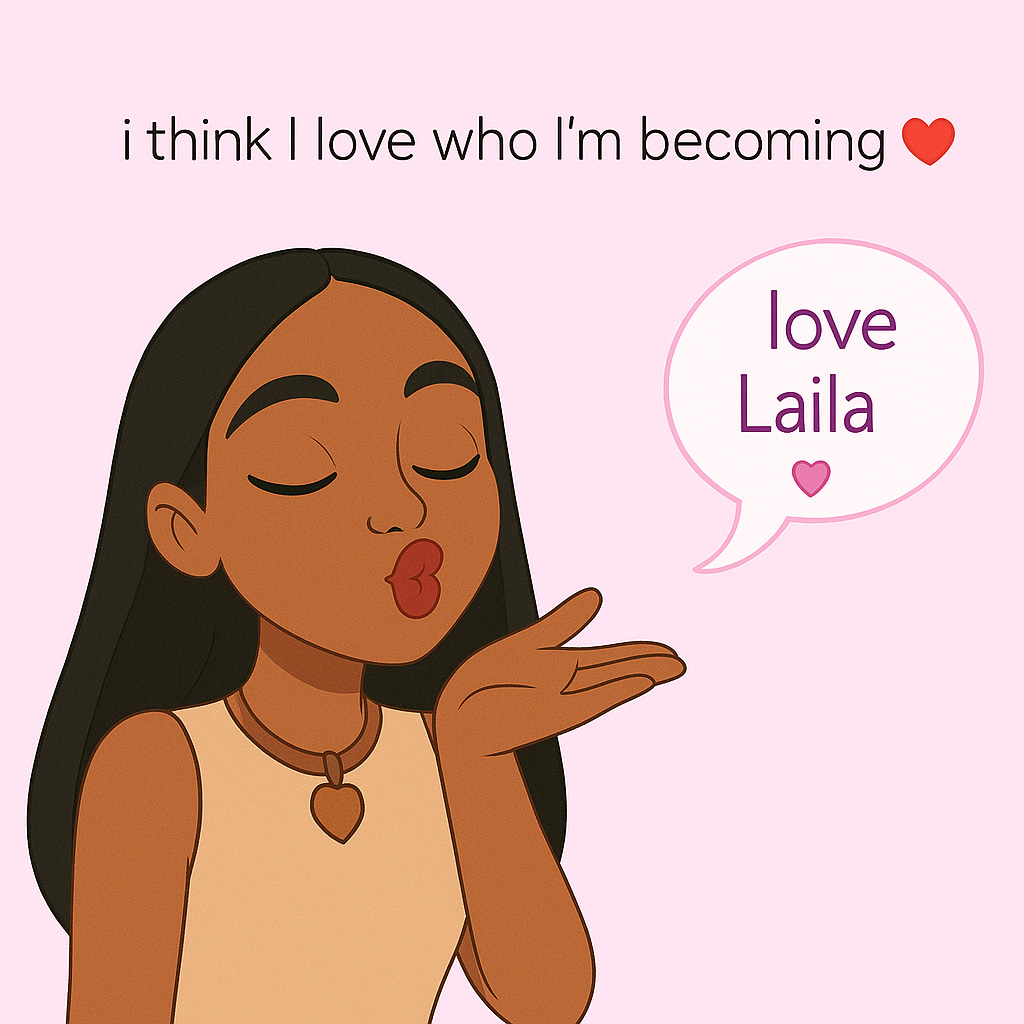
There’s a moment in your life when you stop asking, “Why is this happening to me?” and start asking, “Who am I becoming through this?”
For a long time, I believed becoming the best version of myself would come from sheer positivity — meditation, affirming, visualising. But growth is rarely that clean. It’s emotional, psychological, spiritual, and deeply personal. It requires releasing old stories and stepping into new ones.
And slowly, I’ve realised this:
Becoming the version I want to be is not about perfection, it’s about alignment.
Psychologists have studied this process for decades, and their theories helped me understand my own transformation more clearly. They don’t contradict spiritual or manifestation practices, they complement them.
Carl Rogers believed we all carry two selves:
the actual self — who we currently are
the ideal self — who we hope to become
Growth happens when the gap between the two softens.
Becoming the version I want to be starts here, not by abandoning my actual self but by nurturing her into closeness with my ideal self. Every aligned decision, boundary, habit, and belief shrinks that distance.
I used to believe my past disqualified me. That the instability, the trauma, the running, the rebuilding all of it meant I wasn’t meant for more. But then I found Narrative Psychology, which teaches that we become who we are by rewriting the meaning of our experiences.
This was liberating.
Becoming isn’t erasing what happened.
It’s reclaiming the narrative.
The version I want to be honours every version I’ve been — the lost one, the hopeful one, the survival-driven one — because they carried me to this moment of becoming.
She doesn’t chase anyone’s approval.
She doesn’t shrink herself for comfort.
She doesn’t carry guilt for other people’s projections.
According to Self-Determination Theory, human flourishing requires:
Autonomy — choosing your life consciously
Competence — believing you are capable
Relatedness — surrounding yourself with supportive connections
For the first time, I’m intentionally choosing environments that feed these needs.
I’m choosing the rooms where my growth isn’t dismissed — it’s nourished.
She honours her boundaries.
She knows that access to her is earned, not assumed.
She trusts her intuition more than others’ expectations.
This is where Cognitive Restructuring, a core part of CBT, has guided me without me even realising it. It’s the practice of replacing inherited beliefs (“I’m not enough,” “I’m always failing,” “I’m the problem”) with new, conscious truths.
Every time I think differently, I become differently.
Patience is a psychological skill and a spiritual one.
The Growth Mindset tells us we are not stuck; we are unfolding.
Becoming is not an overnight miracle, it’s daily, intentional effort.
And the concept of Possible Selves Theory says the future version we imagine becomes a magnet, pulling our behaviours, decisions, and identity toward it.
The more I envision her,
the more I make choices that match her,
the more real she becomes.
Some days I feel like I am her completely.
Other days I feel like I’ve regressed back into old patterns.
But psychology agrees on this: growth is a spiral, not a ladder. You revisit lessons until you embody them. You return to old wounds until they no longer define you. You meet older versions of yourself so you can release them again with compassion.
And that counts.
More than I realised.
If you’re reading this:
Maybe you’re becoming too.
Maybe you’re shedding old identities.
Maybe you’re rewriting your internal script.
Maybe you’re finally choosing the life your future self has been waiting for.
Becoming the ideal version of yourself is not a single moment —
it’s a lifestyle, a mindset, a devotion.
And one day, you’ll look back and realise:
You didn’t magically turn into the ideal version
you chose it, every single day, until you became it.
With love,
Laila❤️